Secure, Stylish, and Built to Last: Why Professional Handrail Installations Matter for Your Home
When it comes to home safety, most people think about alarms, locks, and security gates — but one of the most overlooked features is a properly installed handrail. Whether you’re entering your home, walking down a staircase, or navigating a small step, a strong, well‑designed railing can prevent accidents, improve accessibility, and enhance the overall look of your property. Recently, we completed a clean, durable handrail installation for a home in Brackenhurst, and it perfectly highlights why professional workmanship makes all the difference.
Why This Handrail Installation Was Needed
The entrance featured a small staircase — only a few steps — but enough to pose a risk for children, elderly family members, or anyone carrying groceries or heavy items. Without support, even a minor slip could lead to injury.The homeowner wanted:
- Better safety for daily use
- A sturdy railing that wouldn’t wobble
- A clean, modern look that matched the home’s exterior
- A solution that didn’t require major construction or changes
Our custom installation delivered exactly that.
Our Professional Approach
1. Strong, Weather‑Resistant Materials
We used high‑quality steel railing designed to withstand Gauteng’s sun, rain, and temperature changes. This ensures long‑term durability with minimal maintenance.
2. Clean, Secure Mounting
3. Seamless Integration With the Home
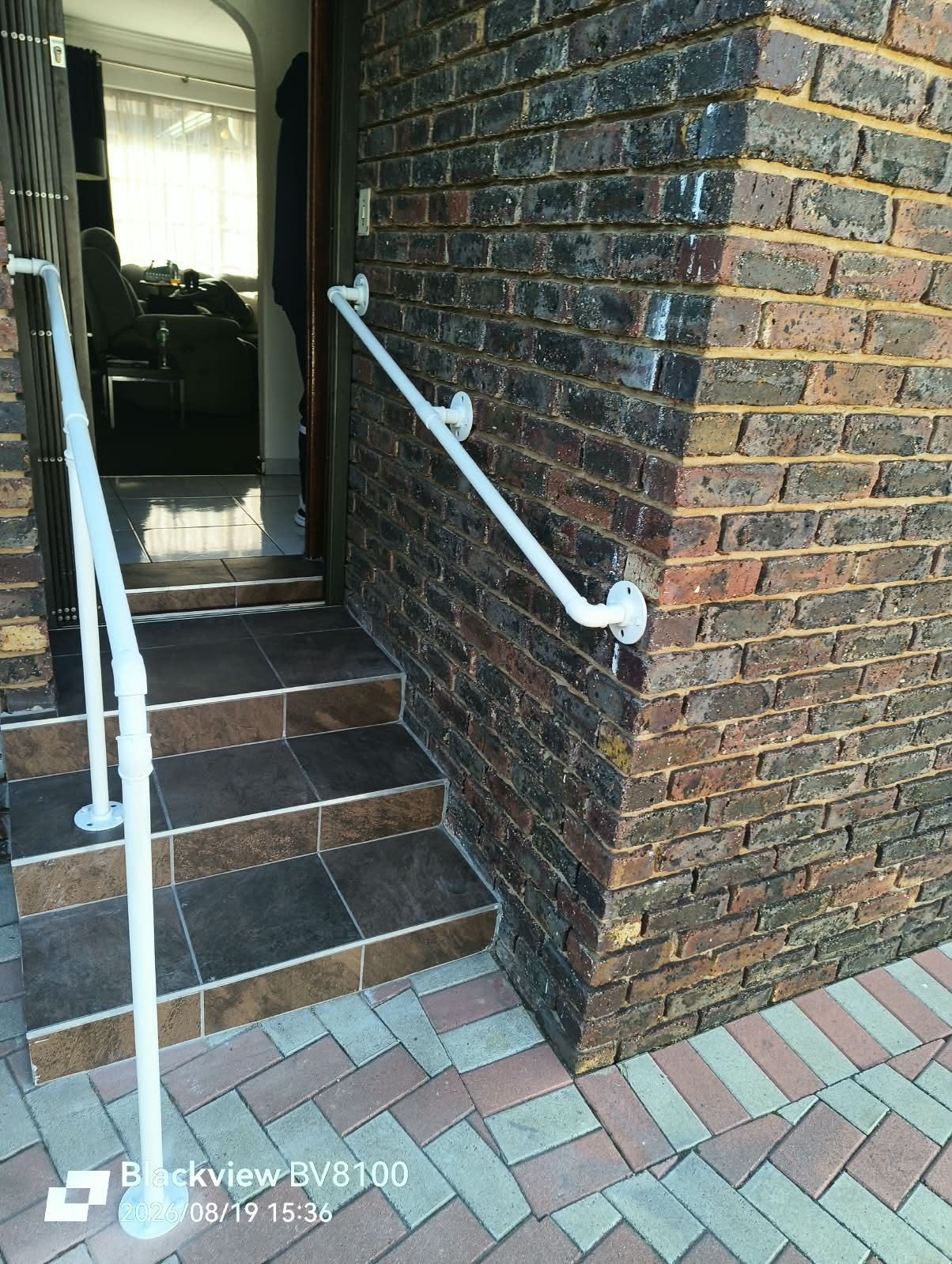
The railing was mounted directly into the brickwork with precision alignment. No wobbling, no weak points — just solid support from top to bottom.
The white railing contrasts beautifully with the dark brick wall and tiled steps, creating a clean, modern finish that enhances the entrance rather than cluttering it.
4. Improved Accessibility
The railing wraps around the corner, giving support from the first step all the way to the doorway. This is especially helpful for elderly residents or anyone needing extra stability.
The Result: Safety Meets Style
The finished installation is more than just a railing — it’s a practical upgrade that improves everyday life. The entrance is now:
- Safer
- More accessible
- More visually appealing
- Better suited for all ages
It’s a small change that makes a big difference.
Why Homeowners in Gauteng Choose Us for Handrail Installations
Spring Forest Plumbing & Maintenance is trusted across Brakpan, Benoni, Springs, and Gauteng for reliable, long‑lasting installations. Clients choose us because we offer:
- Expert craftsmanship
- Durable materials
- Clean, professional finishes
- Fast turnaround times
- Custom solutions for any home or business
Whether it’s handrails, safety upgrades, or general home improvements, we deliver work that stands the test of time.
Thinking About Adding a Handrail to Your Home?
If your entrance, staircase, or patio needs extra safety or support, a professionally installed railing is one of the smartest upgrades you can make. It protects your family, improves accessibility, and adds value to your property. Contact us today for a custom quote — your safety upgrade starts with one call.